Criticisms
On Dreams and Rainbow
2023
Son Songyi | Curator of Um Museum
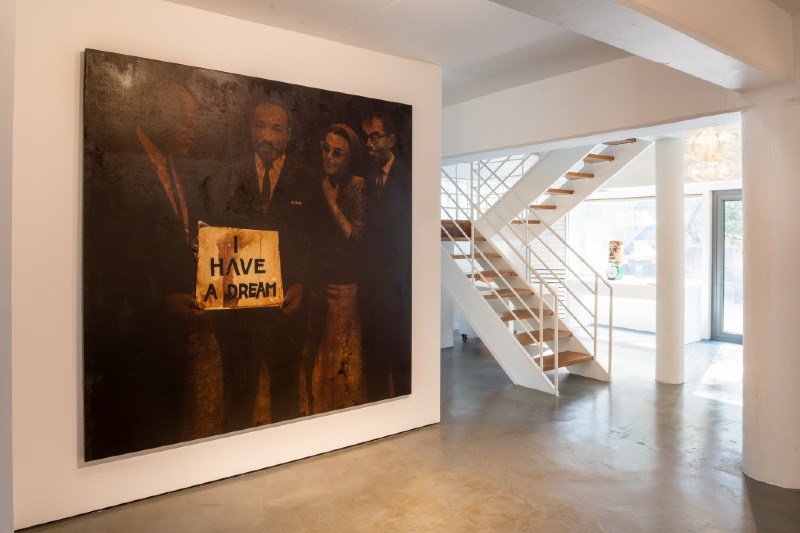
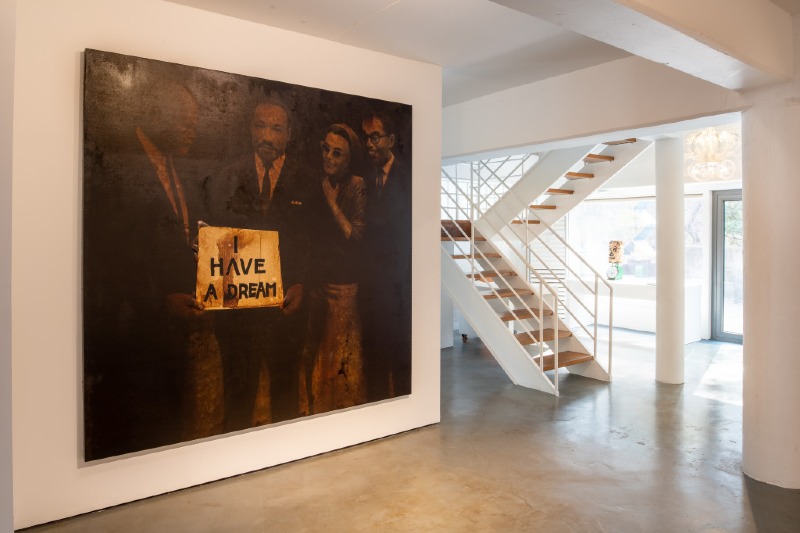
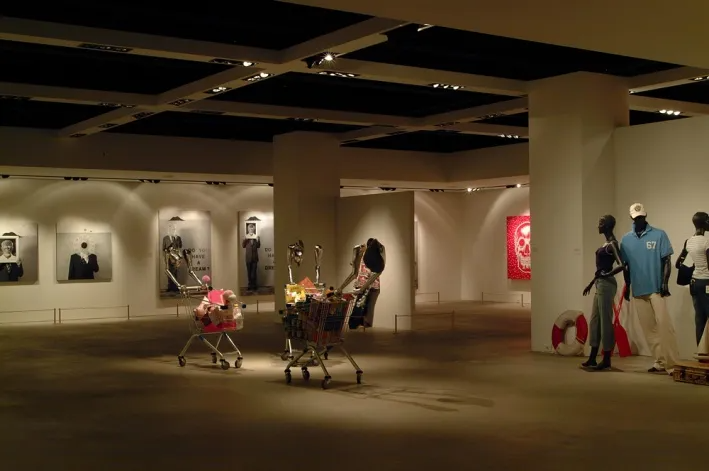
Installation view of《Truthful Objects, The Dream of Art》 © Um Museum
Ci Kim
is an artist of dreams. His dreams are many and varied. This is because his
dreams are not a singular goal to be achieved, but many things he encounters in
his daily life that are renewed each and every moment. Therefore, in order for
us to explain Ci Kim with the keyword ‘dream’, we need to reconstruct the
meaning of the word closer to life and expand the scope of ‘dream.’
As a dreamer, Ci Kim is willing to embrace the world’s complexity and discover
the minute truths of the moment. He is also an artist of rainbows. Just as in
William Wordsworth(1770-1850)’s poem “My Heart Leaps Up When I Behold”(1802),
people still feel fluttered to see a rainbow in the sky, whether as a child or
as an adult. Rainbows are rare, elusive, and sometimes forgotten, but no one
denies or doubts their existence. This intense sense of presence, and the
flashing urge to convey it to others, is the primary motivation for Ci Kim’s
work.
For Kim, dreams and rainbows are both objects that reveal a very real sense of
being alive and flexible ideals that guide his actions. Truthful Objects, The
Dream of Art is organized in a way that reveals various life orientations
through the medium of emotion, following the artist’s approach toward dreams
and rainbows. In addition, the exhibition is organized with the intention to
weave together his various attempts without assuming a single source, concept,
logic, or end goal. For this reason, the exhibition eschews a diachronic
approach that gathers a specific group of works from a specific time period and
attempts to generalize. Ci Kim’s dreams of different moments and the present
emerge in a comprehensive and synchronic way.
The non-demarcation of ‘dreams’ can also be linked to the expansion of the
concept of ‘art’ in a historical context. Plato regarded works of art as
imitations of the Idea and as distortions of truth. Aristotle, on the other
hand, saw the artist as dealing with universal figures in concrete objects.
According to him, art is an imitation of nature, and artists are those who
study objects and turn them into forms of art. Such a view of art as imitation
would later be carried over from Giotto and Cimabue, through the Renaissance,
when imitations of antiquity and nature were made, and into the Victorian era.
However, with the advent of Marcel Duchamp's work in the early 20th century and
movements such as Fluxus, Pop Art, Conceptual Art, and Minimalism in the 1960s,
the idea of art as imitation began to reveal its limitations. In short, we no
longer define art on an epistemological level but rather on an interpretive
level, taking into account the many contextual factors that make a work of art
what it is.
Seeking to reach the ideal of dreams and rainbows through his work, Ci Kim
liberally utilizes various artistic languages that have emerged in existing art
history as materials for his work. In other words, the artist deliberately
chooses borrowing and reappropriation as his own method, going beyond mere
imitation to a meta-approach toward art history itself and a process of
subjective interpretation. That is why his work is a mix of different styles
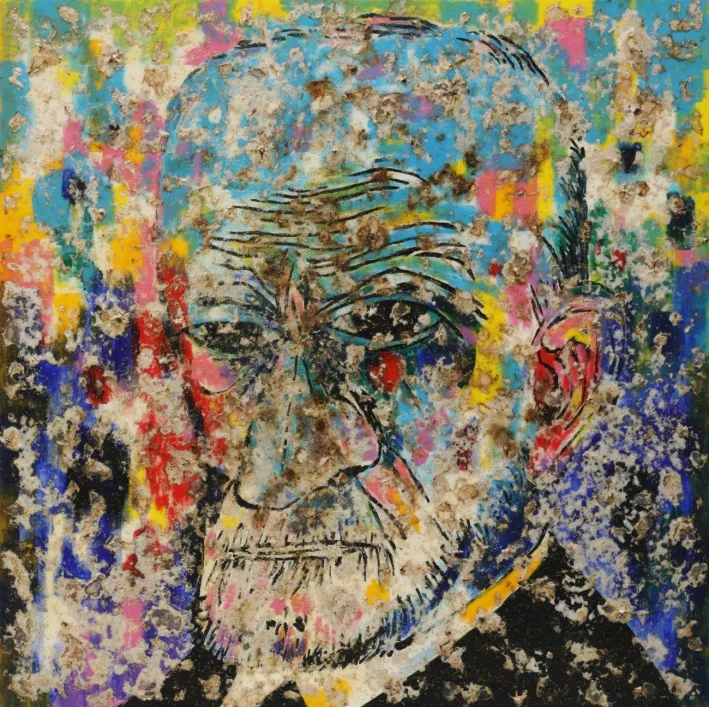
and concepts. For example, he not only created abstract paintings with
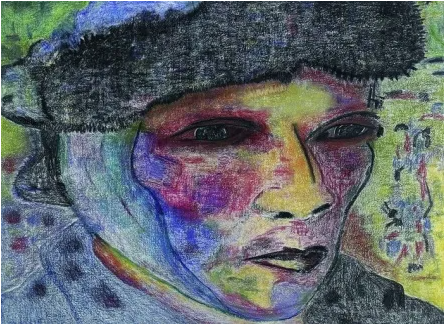
blueberries and coffee beans but also worked on figurative paintings, copying
images from German ABC books and magazine inserts.
In the early years of his
career, he borrowed formal and conceptual elements from Pop art in a series of
‘Natural Pop Art’ paintings. However, unlike Pop artists who sought to alter
the ontological status of mass-produced objects by displaying them as codes of
consumer society, Ci Kim approaches industrial production as a medium for
expressing his own subjective feelings. This is not about approaching things in
terms of value-neutral mechanical repetition.
Rather, it is about actively
talking to and trying to re-signify the things that surround him. His interest
in manufactured goods is still present in his recent works, such as his
anthropomorphic reliefs on plastic water bottles with drawings of arms and
legs. He would crumple a plastic water bottle and realize the inherent life in
the object through the sound it made and the feel of it in his hands.
In this way, Kim mixes seemingly incompatible forms and concepts and tries to
intervene in the already established semantic system itself. He seems wary of
attempts to reduce his identity to a single mold or concept, constantly trying
to deflect the meanings given to him. Furthermore, these attempts also reflect
the context of the struggle for recognition within the art world. For example,
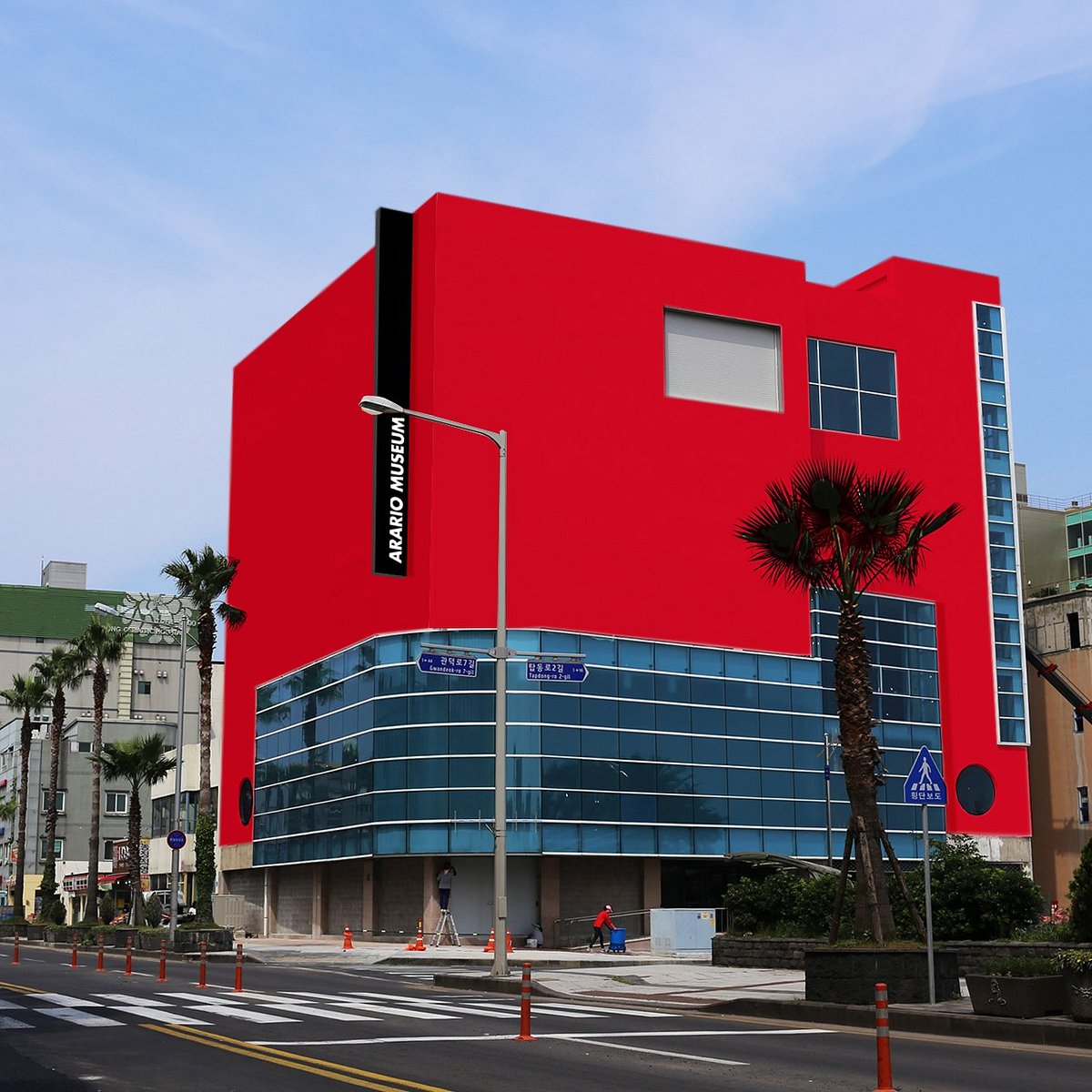
in his 2004 book, Re-making the Armory Show: The International Fair of New Art,
he recreated the Armory Show as part of his project, using the event’s
promotional materials and VIP invitations as him being an influential
collector.
The incorporation of his interpretations into influential
institutions and exhibitions within the art world is also reflected in his work
today. For example, he has drawn on printed matters published by the Tate
Modern and the National Museum of Modern and Contemporary Art, Korea, and has
included correspondence with art world figures in his work. These works
indirectly expose the web of influences that make the art world work: the art
market, exhibition organizations and institutions, collectors, critics, and
fellow artists. By expressing his feelings and symbols in between these
relational terms, Kim creates a small crack in the established hierarchy.
Ci Kim has been trying to change the meaning of not only art, but also the
things we encounter in the course of life. For example, he reminded us of
dreams that follow the meaning of suffering like a shadow in order to examine
it in a multifaceted way. He also drew pressure points on a skull to transform
the meaning of death closer to life. These are works that evoke the multiple
meanings beyond the signifiant semiosphere such as the system of language.
Perhaps he emphasizes a childlike mind because he wants to liberate the senses
of the world, which are limited by the realm of signifiers like language. In
this sense, the desire to share the wonder and richness of the world, as
perceived by a child who has not yet learned to speak, may have been the underlying
motivation for Kim’s playful works. As such, he pays homage to all that is
manifest in life by leaving room for meaning yet to come, as if he is waiting
for a rainbow.
References
Writings