Interview
Do you know ARARIO? “Art is Life, Life is Art”
2015
Lee Joonhee | Monthly Art Editor of Chief
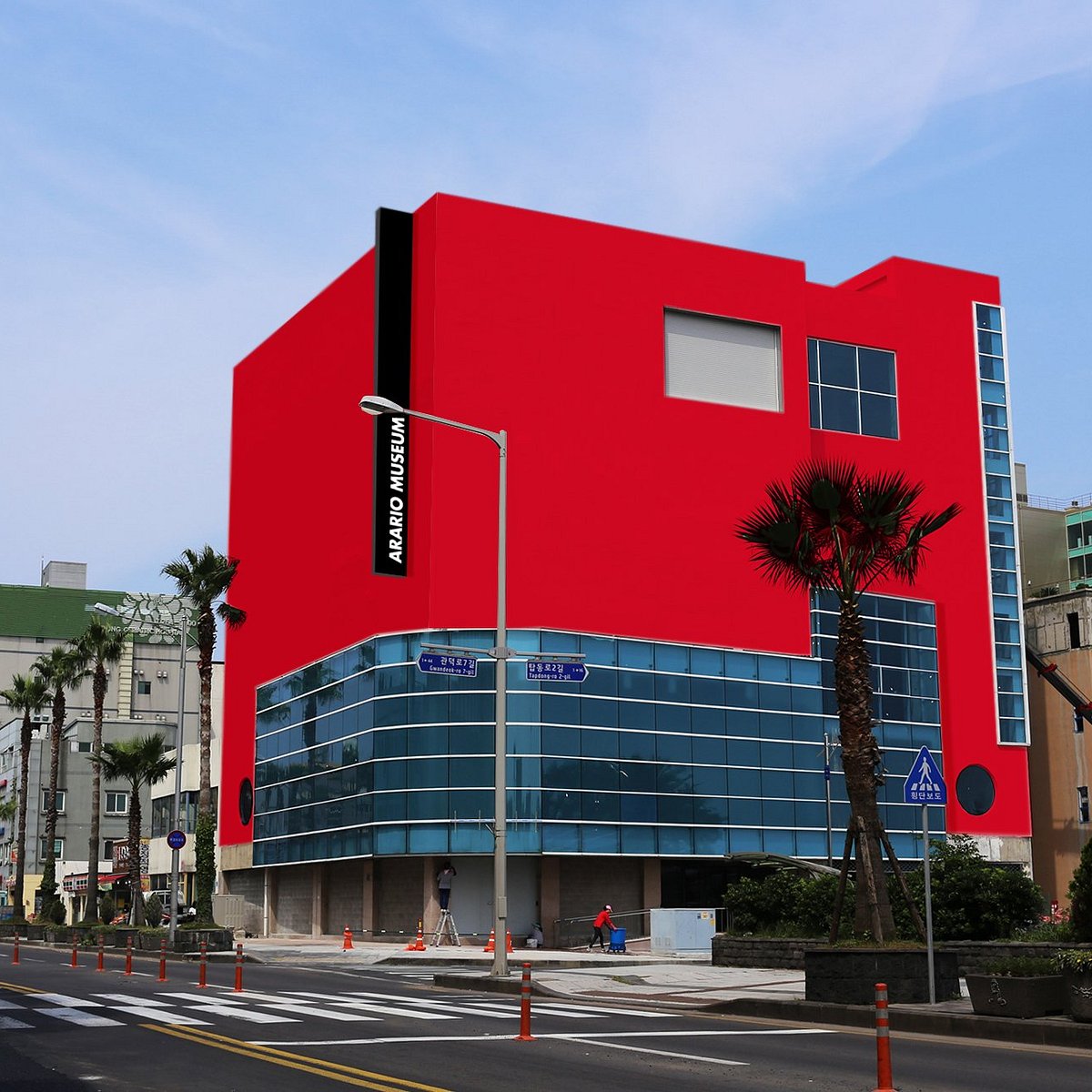
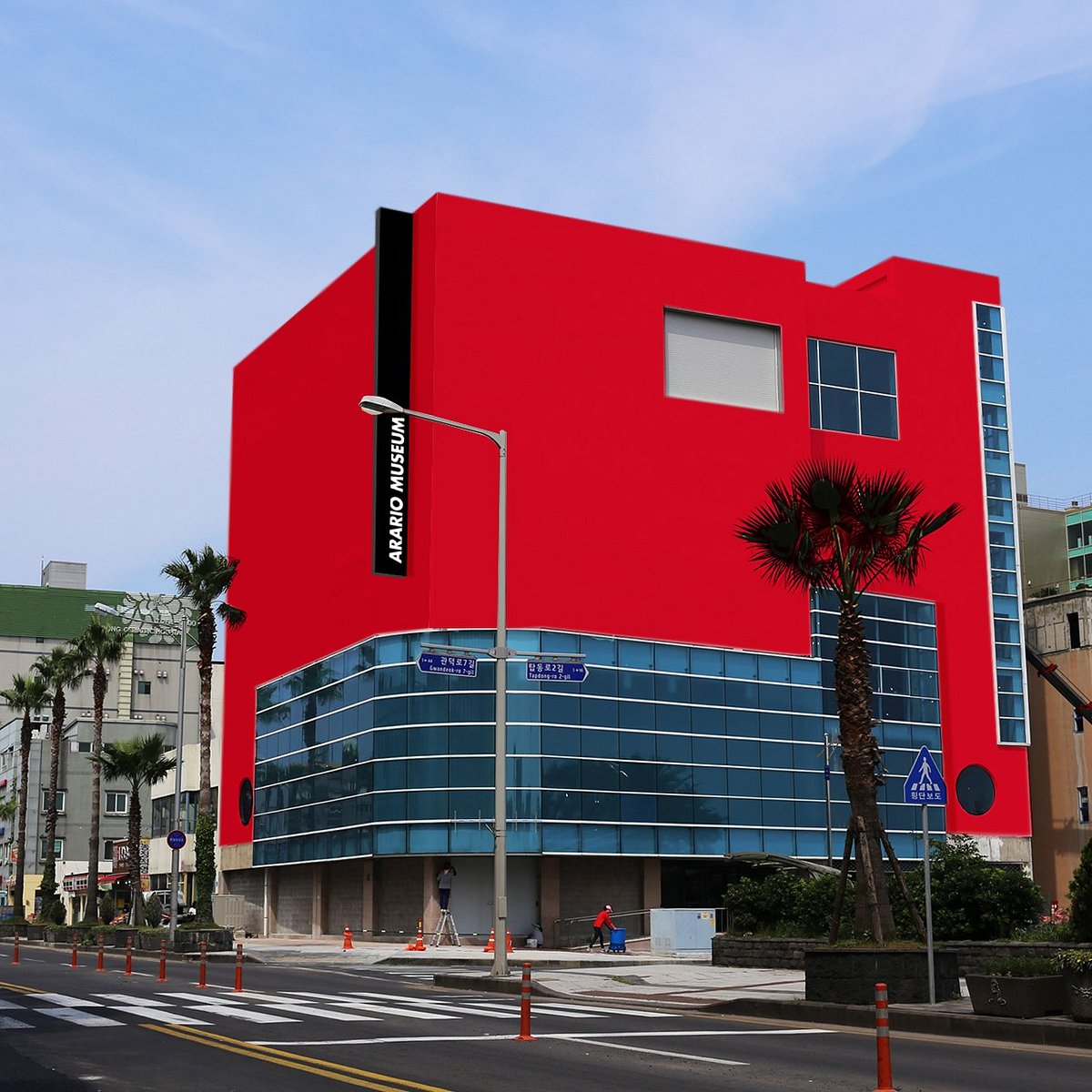
Exterior of “ARARIO MUSEUM Tapdong Cinema” © ARARIO MUSEUM
Jeju City’s Tapdong district on Jeju Island is home to ARARIO MUSEUM. It is located approximately ten minutes by car from Jeju International Airport and twenty minutes on foot from the Jeju Port Passenger Terminal. Despite its favorable location, the area had once deteriorated to the point where urban hollowing-out had become a serious concern. Since ARARIO MUSEUM opened last year, however, visitors have begun returning. As if resuscitated by the museum’s arrival, the neighborhood has regained its vitality and rapidly emerged as a new cultural hotspot.
The person responsible for this dramatic transformation of Jeju’s declining old downtown is Chairman Kim Chang-il. A successful businessman, an internationally renowned collector, a museum founder, and an artist, Kim leads a life encompassing four distinct roles. Even today, he spends nearly half of each month at his studio on Jeju, making art and developing new business ideas. We met him in his office next to ARARIO MUSEUM Tapdong Cinema.
“Art Is Life, Life Is Art”
When did you first begin dreaming about art and, ultimately, about establishing a museum?
I grew up in Hoehyeon-dong, at the foot of Namsan Mountain in Seoul. I still remember it vividly. After the rain had stopped, sunlight suddenly poured through the clouds, and an enormous rainbow appeared across the sky. The sight was like heaven—like the universe itself. Although I was still very young, it made me question my own existence. I asked myself, “What on earth am I?”
In any case, I purchased my first artworks in 1978, when I was twenty-eight. At an art fair held at Hoam Art Hall, I bought works by Namnong Heo Geon and Cheongjeon Lee Sang-beom. Even now, I find it remarkable. Nobody taught me, encouraged me, or even told me about collecting. It was as if I were possessed by something: I went there on my own and bought the paintings. From then on, I gradually developed an eye for art. By immersing myself completely in one pursuit, my sensibility evolved. I never received formal art education, nor did I study abroad. No one taught me. I learned entirely in the field, experiencing everything with my whole body.
The decisive moment that prompted me to think seriously about a museum, however, was my visit to the Museum of Contemporary Art, Los Angeles—MOCA. MOCA became a turning point in my life.
Do you have a particular standard or guiding principle when deciding which works to acquire?
Simply put, I buy works that possess “life” and “soul”—works with unmistakable originality and identity. I do not collect according to an artist’s name. If I conclude that a work contains life and soul, I may even be willing to pay twice its asking price. There is a great deal of discussion about Dansaekhwa in the Korean art market today, but what matters is not merely whether a work belongs to Dansaekhwa. What matters is determining which works within Dansaekhwa are genuinely good.
What, then, makes a good collector?
Above all, I believe an art collector must possess integrity and credibility. A collector’s character is reflected in the collection list. When others recognize the value of that collection, they naturally come to respect the collector as well. That is what I mean when I say that one must acquire works containing life and soul.
If you do that, financial returns may eventually follow. But if you begin by trying to make money from a collection within a short period, you will ultimately have nothing meaningful to leave behind. What matters is that the collection’s value will be proven ten or twenty years later.
What have you learned from running galleries?
Running a gallery is a game of survival. In that sense, I learned everything live, as it happened. Through actual experience, I studied with my whole body and learned in ways I could feel directly. I opened a gallery in New York and eventually lost money, but I regard that experience as a vaccination that prevented an even greater disaster.
Which exhibition remains most memorable to you?
The 2005 group exhibition that introduced the Leipzig School to Korea for the first time. At the time, the Leipzig artists were virtually unknown, and no one was willing to purchase their work. But I believed their work contained life and soul. Looking back, I still feel tremendously proud that we organized that exhibition.
You are also well known as a collector who makes art himself.
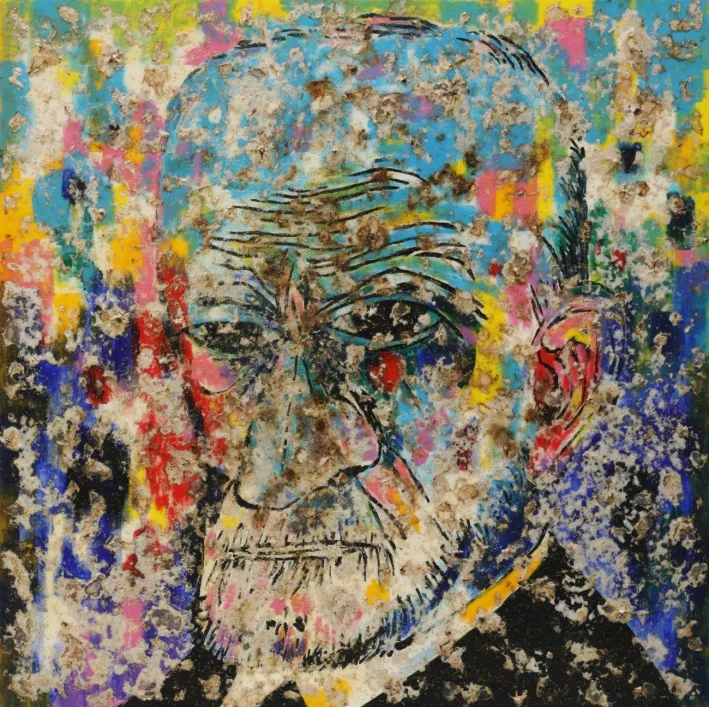
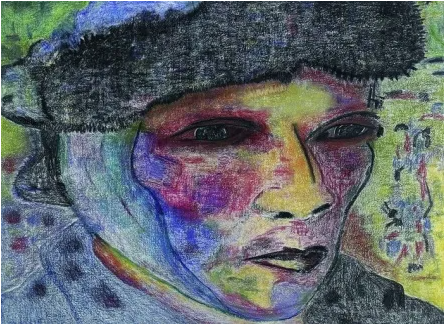
Artists are beings who seek to become more like God because they attempt to create. The same is true of me. I do not make art because I want to become famous. If I had not been making art as I do now, I would probably have ruined my life. (Laughs.) When I was younger, my life swung between extremes. I was really like the Hulk. (Laughs.)
Yet the disposition I inherited from my parents—devout Christians who came south from Pyongyang—was very gentle, quiet, timid, and reluctant to stand before others. Ask any of my classmates from Whimoon High School. (Laughs.) But I changed considerably after failing the university entrance examination twice, especially during my military service.
While serving in the Honor Guard at Army Headquarters, I was beaten severely. Later, I began my business in Cheonan, a city where I had no personal connections, and at a rough bus terminal, no less. Somehow, I developed a tenacity and power of concentration that I had never known I possessed.
Perhaps that is why, in those days, I would suddenly climb onto a table and sing in front of a crowd. Doing so gave me a sense of stability and made me feel calm. It was a kind of mental illness. (Laughs.) I am no longer like that. I think making art has taken over that function. If I had not been making art, I might be in a psychiatric hospital by now. (Laughs.)
It sounds as though the artist in you was always stronger than the collector.
At one point, I operated as many as twenty-five restaurants, and I was personally involved in the interior design of every one of them. When I first started operating a kiosk at the Cheonan bus terminal, I designed the interior myself using aluminum, a material rarely employed for that purpose at the time.
Later, when I visited Los Angeles, where my wife’s family lived, I entered a restaurant whose interior greatly appealed to me. Back then, however, it was not as easy as it is today to take photographs freely inside restaurants. You had to use an analog film camera with a flash going off repeatedly. If you took photographs without permission, you could even get into trouble with the police.
So I drew the restaurant interior instead. Even today, whenever I encounter a space or place I like—whether it is a restaurant, clothing store, or café—I draw it on the spot. I also take an enormous number of photographs whenever I travel. Through that process, I seem to have developed an instinctive understanding of composition. This training has been immensely helpful in my work as an artist.
You always seem to be filled with passion and energy. What is the source of that energy?
What matters is not exhausting your energy, but concentrating it when it is needed. Sometimes friends ask me to design their houses, but I refuse. I simply do not want to do it, because it would drain my energy. (Laughs.)
From the early days of my business, I always employed both a driver and a secretary. I obtained my driver’s license in 1978, but I do not drive myself. During that time, I can concentrate on thinking, or sleep and replenish my energy if I am tired. That is why I believe paying a driver’s salary ultimately benefits me.
The same applies to my secretary. My secretary handles routine and repetitive duties, while I devote myself exclusively to creative work. I do not use a smartphone or email either. My secretary sends everything to me by fax.
Did you choose the name “ARARIO” yourself?
As I mentioned, I was timid by nature. I did not socialize well, and I rarely stood out. After failing to enter university twice, I even blamed God for no reason. (Laughs.) Then, during my second year at university, I joined the army, and it was a genuine nightmare. It would be unthinkable today, but I was beaten constantly and subjected to severe disciplinary punishment.
As a private, I would stand guard at a helicopter landing pad in the early morning, listening to insects chirping in the complete absence of other people. I meditated simply as a way of killing time. As I became absorbed in it, an hour began to feel like ten minutes. Then, without warning, the words “Arirang, Arirang, Arariyo” came into my mind. At that moment, I decided that if I ever started a business, I would call the company “ARARIO.” (Laughs.)
It is also convenient in English because it begins with the letter A, and I like that it is a purely Korean word without corresponding Chinese characters. I named my other companies as well. There is a Korean joke that shortens “Hongdo-ya, uji mara” (“Hongdo, do not cry”) to three syllables, “Hongdo-ttuk.” In a similar way, the company name “Yawoori” was taken from the first three syllables of the phrase “Ya! Uridulman-ui sesang”—“Hey! A world of our own”—which came to me while I was meditating. As for the names of the ARARIO MUSEUM venues on Jeju, some people suggested “CI Kim Museum,” following examples such as the Guggenheim Museum or Fondation Beyeler. But I wanted to preserve the histories and distinctive characteristics of the original buildings, so I named them Tapdong Cinema, Bike Shop, and Dongmun Motel.
Opening a museum could not have been an easy decision.
I began collecting in 1978. In 1989, I opened my first gallery inside a department store, and it remained there until it closed in 1999. In 2002, I constructed a new gallery building and established a sculpture plaza. Over more than twenty years of running galleries, I formed a wide range of relationships both in Korea and abroad.
Whenever I visited an overseas museum, I also developed a habit of closing my eyes for several hours that evening and mentally rewinding all the artworks I had seen during the day. It was not purposeful study. I simply did it for amusement because there was nothing else to do in the hotel room. (Laughs.) By repeating this process, I developed a certain intuitive sensibility, or chok—a kind of instinctive perception.
In the past, the art world was led relatively straightforwardly by galleries and artists. It was like a bicycle with two wheels. Today, however, it has become much more complex, like a car with four wheels. Galleries and artists coexist with collectors and museums, mutually sustaining one another through organic networks and relationships.
Museums once dealt directly with artists. But if a museum now wishes to organize an exhibition of a deceased artist, it inevitably has to approach the galleries or collectors who maintained relationships with that artist. We have entered an era in which good collectors help lead contemporary art.
One of the museum’s most striking qualities is the way it preserves the existing buildings’ original structures and characteristics.
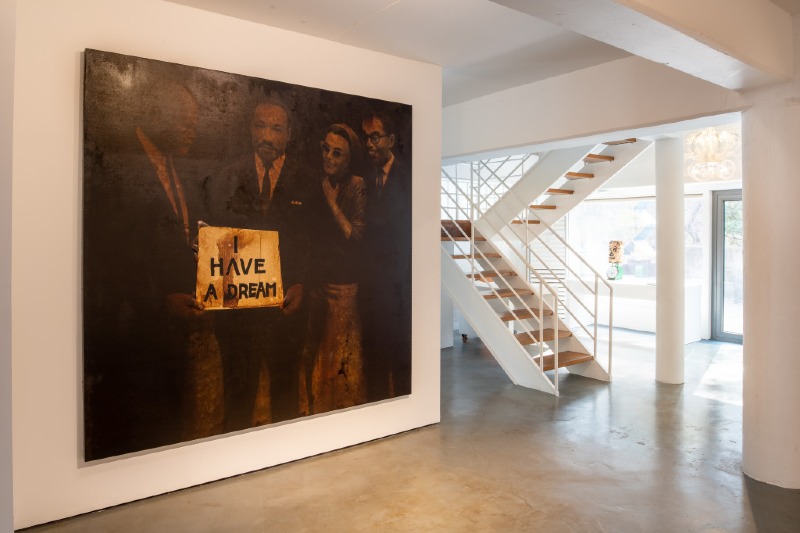
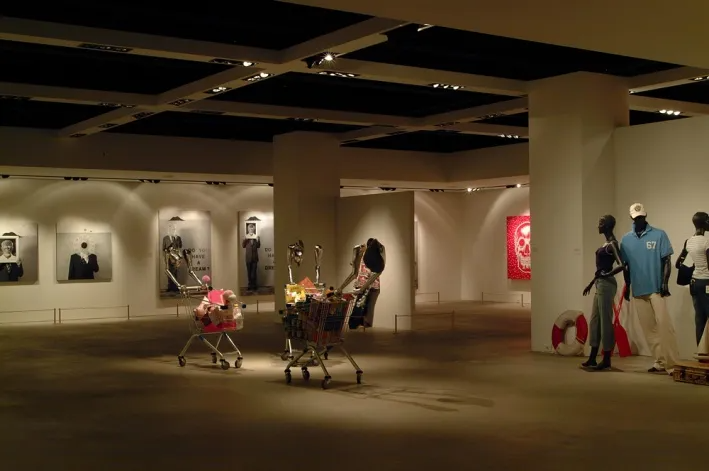
I am not a specialist in art history, but I believe that painting largely dominated the transition from modern to contemporary art. The space suited to that painting was the “White Cube.” Contemporary art, however, is different. It encompasses not only painting but also video, installation, and numerous other forms. The white cube is therefore not necessarily suited to accommodating these tendencies. A space that is too clean is uninteresting; even a newly constructed building lacks flavor.
Architecture requires one or two hundred years before its true character emerges, like a stone pagoda in an old Buddhist temple. Smooth granite buildings constructed today simply do not have that character. That is why I consider cement the greatest building material created by humankind. When contemporary artworks are harmoniously placed in a building whose surfaces contain traces of the past, almost like mold embedded over time, an entirely new character emerges. The different elements form a harmony. Perhaps that is why so many architecture students visit the museum.
Like ARARIO MUSEUM in SPACE in Seoul, the museums on Jeju combine exhibition spaces with restaurants, a craft-beer pub, and art shops, forming an “Art Town.”
People on Jeju call this neighborhood “ARARIO Road.” Our goal is to attract one thousand museum visitors a day, and more than sixty percent of our visitors are tourists from outside Jeju rather than local residents. When Dongmun Motel II and the select shop open in April, I believe the first phase of the Jeju museum project will be complete.
I believe fashion completes a museum. When you enter a restaurant, you are generally expected to order and eat something. A clothing store is different. You can enter and look around without necessarily buying anything. Museums also need to develop a culture in which people feel as comfortable browsing as they do in a clothing store. Only then can “Art is Life, Life is Art” be realized in its true sense.
What is the most recent work you have acquired?
It is a work by the Japanese artist Tatsuo Miyajima that appeared at a Christie’s auction. I regard the museum director as a conductor. Just as an orchestral maestro listens to the sounds of different instruments and envisions the overall character of the music, I constantly imagine the repertoire and harmony of works to be exhibited in the museum. The individual works are important, of course, but the harmony of the exhibition as a whole is even more important. I therefore picture it in my mind: a video work placed here, a painting hanging there, an installation positioned somewhere else.
For example, I paid 2.5 million dollars for the series of Andy Warhol prints displayed at Tapdong Cinema. I had originally bought it for 100,000 dollars and later resold it for 250,000 dollars. I then bought it back for ten times that amount—for the sake of the museum’s harmony. Similarly, I recently replaced a work by an Italian artist in a small room on the fifth floor of ARARIO MUSEUM in SPACE with a sculpture by the late Korean artist Ryu In. I also acquired the Tatsuo Miyajima work after considering how it would contribute to the harmony of the exhibition space at ARARIO MUSEUM in SPACE.
Is there a museum that remains especially memorable to you or that you regard as a model?
As I mentioned earlier, my first visit to MOCA unconsciously planted the dream of a museum in my mind. But it was Dia Beacon that made me resolve to turn that dream into reality. The experience was an enormous shock. I found it overwhelmingly powerful. By the time I finished seeing the museum and came outside, I was on the verge of collapsing.
My wife and son had to support me and help me to an outdoor bench, where I sat for a long time replaying the experience in my mind. In that museum, I encountered the material realization of my imagination and a vision of the future. It had discarded the extravagance and vanity carried out in art’s name and relinquished the museum’s institutional authority. My experience of Dia Beacon, and the impression it left behind, made this museum possible.
What kind of museum do you envision for the future?
Perhaps the museums I operate today are only rehearsals. The ultimate museum I imagine would consist of a series of box-like forms—massive blocks seemingly dropped onto the landscape—with only one artwork inside each space. The work could never be sold, and without that particular work, the box containing it would become an entirely meaningless space. I have purchased 150,000 pyeong of land—approximately 495,000 square meters—in Hado-ri, where my studio is located. I hope to challenge yet another possibility there. ●
References
Writings